

The browser you are using is not supported by this website. All versions of Internet Explorer are no longer supported, either by us or Microsoft (read more here: https://www.microsoft.com/en-us/microsoft-365/windows/end-of-ie-support).

Please use a modern browser to fully experience our website, such as the newest versions of Edge, Chrome, Firefox or Safari etc.

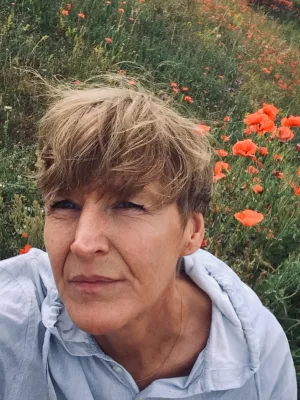
Portrait if Ann-Sofi Sjöqvist. Photo

Ann-Sofi Sjöqvist

Degree of Master of Science in radiography from Karolinska Institute, Stockholm Radiographer at Skåne University Hospital in Malmö PhD student at Lund University, Faculty of Medicine Department of Translational Medicine, Radiology Diagnostics, Malmö

Portrait if Ann-Sofi Sjöqvist. Photo

I am a radiographer and since 2019 I have been a part-time doctoral student. My main clinical field in radiography is magnetic resonance imaging (MRI) which I have been working with for more than 20 years, both in Denmark and Sweden. My interest in radiography, besides MRI -imaging and the technique, are the interactions I have with the patients coming for their examinations. People’s life stories and experiences are also my greatest tool in the clinic, making the examination the very best. This interest led me to begin my PhD journey with the aim of exploring and investigating experiences of MRI.

One category coming for an MRI examination and who is often mistaken for a patient, is the woman in surveillance for a hereditary risk of breast cancer. She comes to our department regularly for her breast MRI and the reflections of her experiences of surveillance captured my interest. The PhD project includes getting to understand these women’s perceptions and lived experiences through in-depth interviews to investigations of psychosocial distress, anxiety and health related quality of life through a longitudinal multicentre observational study.

The research team to whom I belong is also interested in adherence to surveillance versus which women who opt for risk-reducing mastectomy, a project in collaboration with yet another research team (SHE-BREMS). The results of this study can give us a key of how to implement person-centred care throughout the chain of healthcare professions in surveillance for women with a hereditary risk of breast cancer.

Publications

Displaying of publications. Sorted by year, then title.